
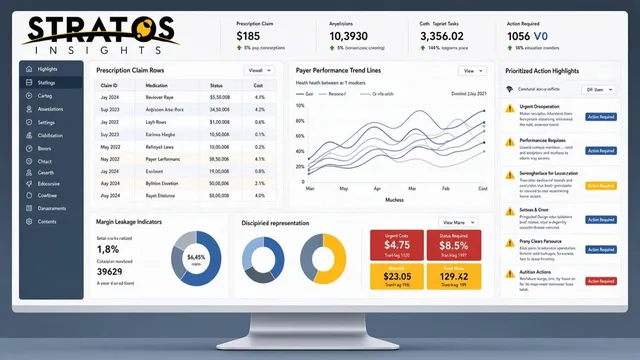
How Claims-Level Visibility Improves Financial Decision-Making
Claims-level visibility helps organizations connect reimbursement, payer behavior, cost, fees, rebates, and margin to stronger financial decisions.
Oversight series
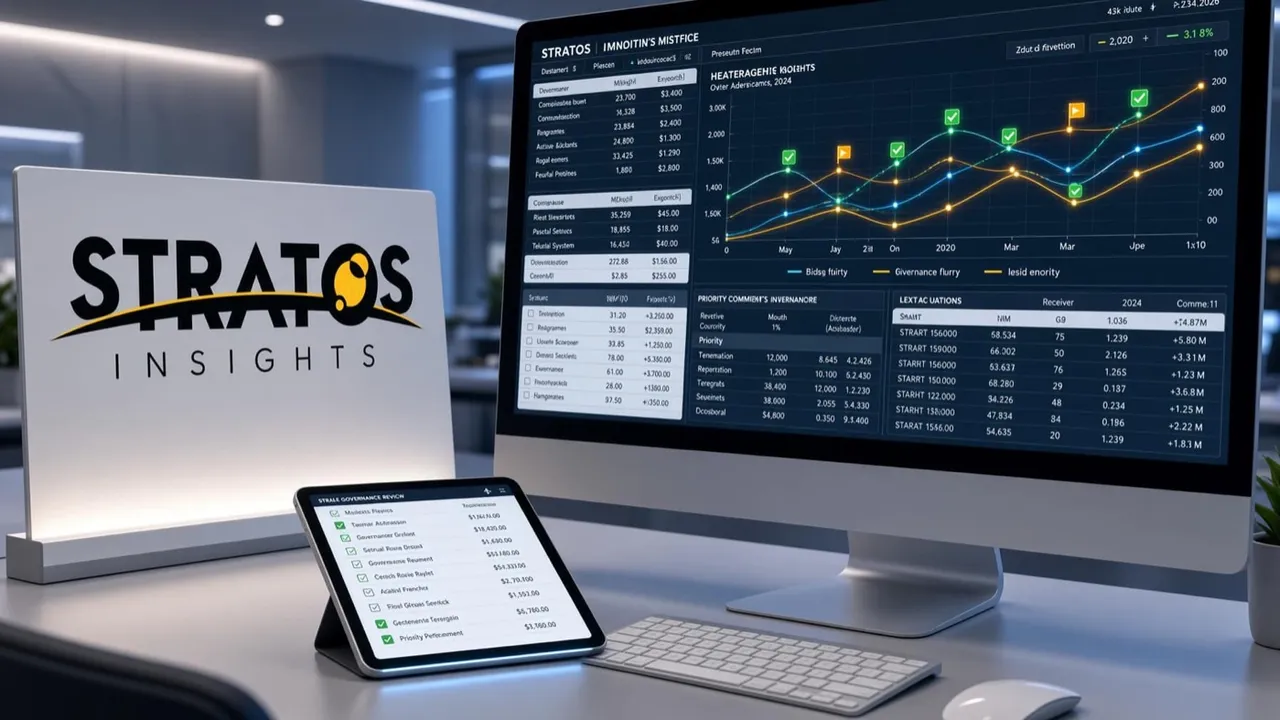
Why public and private sector leaders need independent claims-level visibility into PBM reimbursement behavior, plan performance, and true profitability
Reimbursement integrity oversight is becoming a governance requirement because pharmacy benefit economics are too complex, too financially material, and too opaque to manage through summary reporting alone. Public entities, employers, health plans, and pharmacy organizations all need to know whether reimbursement behavior is explainable, validated, and aligned with the financial outcomes they are responsible for overseeing.
The issue is not simply whether pharmacy claims were processed. The issue is whether the economics behind those claims can be understood. Were pharmacies reimbursed according to expected logic? Did plan-paid amounts, pharmacy reimbursement, rebates, fees, spread-related differences, and gross margin outcomes reconcile? Which payers, channels, products, or claim types created financial pressure? Where did reimbursement fall below expected cost or margin thresholds?
Those questions are receiving more attention because PBM practices and reimbursement economics are under sustained public and private scrutiny. Federal Trade Commission staff reports in 2024 and 2025 focused attention on PBM market concentration, specialty drug pricing, reimbursement practices, and affiliated pharmacy dynamics. In January 2026, the U.S. Department of Labor proposed PBM fee-disclosure rules intended to help self-insured group health plan fiduciaries better understand PBM compensation flows. These developments point to the same reality: visibility is useful, but reimbursement integrity requires independent validation.
Featured definition: Reimbursement integrity oversight is the independent review of pharmacy claim and financial data to determine whether reimbursement behavior, PBM reporting, payer performance, fees, rebates, and margin outcomes are accurate, explainable, and aligned with an organization’s oversight responsibilities.
Reimbursement integrity means more than checking whether a claim paid. It means understanding whether the financial result of that claim makes sense. A prescription claim can include ingredient cost, dispensing fee, patient cost share, plan payment, pharmacy reimbursement, network logic, rebate assumptions, administrative fees, reversals, adjustments, and other downstream economics.
When those elements are reviewed only in aggregate, important patterns can disappear. A plan may see total pharmacy spend increase without understanding which drugs, payers, or channels drove the change. A pharmacy group may see prescription volume rise while gross margin weakens. A public employee health plan may receive PBM reporting without independent validation of whether the reported result reflects the underlying claims.
Reimbursement integrity oversight focuses on the underlying economics. It asks whether claim-level behavior supports the reported outcome and whether that outcome can be explained to leadership, fiduciaries, regulators, auditors, or ownership groups.
Several forces are converging at once. Pharmacy benefit costs remain highly visible. PBM compensation and spread pricing are under policy scrutiny. Specialty and high-cost drugs can create outsized financial movement. Rebate structures and affiliated pharmacy relationships can make net economics difficult to interpret. At the same time, employers, public plans, and oversight bodies are expected to make more defensible decisions with limited internal bandwidth.
In this environment, routine reporting is not enough. A report can show a trend without explaining the reimbursement behavior behind it. A disclosure can identify compensation categories without proving whether the final economics align with expectations. A dashboard can show utilization without showing whether payer performance or claim-level reimbursement is creating margin leakage.
The growing need for reimbursement integrity oversight is really the growing need for evidence. Organizations need a practical way to move from visibility to validation.
Reimbursement integrity issues often appear in places that are hard to see from summary reports.
None of these issues should be assumed without evidence. That is exactly why independent analysis matters. Reimbursement integrity oversight should be careful, data-grounded, and specific.
Claims-level analysis is the foundation of reimbursement integrity oversight because the claim is where pharmacy benefit economics become concrete. It is where payer logic, patient cost share, pharmacy reimbursement, plan cost, product selection, network terms, and downstream financial assumptions intersect.
A claims-level review can show which transactions are driving spend, where reimbursement behavior changed, which payers are producing margin pressure, and whether PBM reporting reconciles with the underlying data. It can also separate normal variation from patterns that deserve follow-up.
For oversight leaders, this matters because the question is not simply ‘What did we spend?’ The stronger question is ‘Can we explain how the reimbursement outcome was produced?’
For Attorneys General, Offices of Inspector General, Insurance Commissioners, state associations, and public employee health plans, reimbursement integrity is tied to stewardship. Public-sector stakeholders may need to evaluate whether taxpayer-funded or member-funded pharmacy benefits are being administered with appropriate financial accountability.
Independent reimbursement analysis can help public-sector leaders review below-cost claims, reimbursement variability, PBM reporting limitations, and claim-level economics. It does not replace legal, regulatory, actuarial, or audit judgment. It strengthens the factual basis for asking better questions and understanding whether financial outcomes align with oversight responsibilities.
For self-insured employers and other plan sponsors, reimbursement integrity connects directly to fiduciary governance and vendor accountability. Pharmacy benefit arrangements can involve multiple compensation flows, including administrative fees, rebates, spread-related economics, and other payments or offsets. The DOL’s 2026 proposed PBM fee-disclosure rule reflects the importance of giving plan fiduciaries clearer information about those flows.
But access to information is only the first step. Employers still need to interpret the information, reconcile it to claims, and determine whether reported plan performance is supported by the underlying reimbursement economics. Reimbursement integrity oversight helps turn disclosure into decision-ready insight.
Health plans, Medicare Part D organizations, and Medicaid managed care organizations also face reimbursement integrity questions. Payer performance, network economics, pharmacy reimbursement, specialty drug behavior, and high-cost claim activity can all affect financial predictability.
Independent analysis can help payer organizations identify outliers, monitor reimbursement trends, compare channel performance, and understand which claims or categories deserve closer attention. The goal is not to create more reports. The goal is to make reimbursement behavior clearer and more actionable.
For multi-location pharmacy groups, reimbursement integrity is inseparable from true profitability. Volume does not guarantee margin. A pharmacy group can fill more prescriptions while payer mix, acquisition costs, reimbursement variability, or warehouse performance quietly weakens gross margin.
Claims-level reimbursement analysis helps pharmacy organizations understand where margin leakage exists, which payer relationships are affecting profitability, and which operational opportunities should be prioritized. This is where Stratos’ focus on true profitability visibility becomes practical: the profitability story already exists in the data, but it has to be analyzed at the right level.
A reimbursement integrity oversight process should be structured enough to support defensible decisions but practical enough to use. Strong oversight should include:
This framework helps organizations avoid a common problem: having more data than insight. Reimbursement integrity oversight should simplify decision making, not bury leaders in technical detail.
Independence is important because PBM reporting is often supplied by the entity being overseen. That does not mean PBM reports are inherently wrong. It means the organization needs a way to validate the reports, reconcile the financial outcomes, and determine whether the data supports the decisions being made.
Independent oversight also helps stakeholders avoid two extremes. One extreme is accepting every supplied report at face value. The other is assuming every variance is improper. A disciplined reimbursement integrity review does neither. It follows the evidence, explains the economics, and prioritizes what matters.
Stratos Insights frames reimbursement integrity as a practical governance discipline. The brand is not positioned as a dashboard vendor. It is positioned as an independent reimbursement oversight and profitability intelligence authority that helps organizations understand true gross margin performance, validate reimbursement behavior, analyze claims activity, and gain clearer visibility into reimbursement economics.
That approach rests on four Stratos priorities.
Organizations need to move beyond invoice comparisons and broad reimbursement assumptions. True profitability visibility requires understanding actual gross margin performance across payers, channels, and reimbursement environments.
Oversight leaders need to understand how claims activity, payer behavior, and reimbursement trends affect financial performance. Clarity makes it possible to separate noise from meaningful change.
Reimbursement integrity oversight should surface the most important opportunities and risks, including loss mitigation, reimbursement trends, preferred therapy opportunities, adherence impact, margin improvement, and payer performance visibility.
Visibility is not the same as accountability. Independent oversight helps organizations validate PBM reporting, reimbursement behavior, and claims-level economics so decisions are grounded in evidence.
Organizations should consider reimbursement integrity oversight when:
These signals do not automatically prove a problem. They indicate that a deeper, independent review may be needed to understand what is actually happening.
The growing need for reimbursement integrity oversight reflects a basic shift in pharmacy benefit governance. Stakeholders are no longer satisfied with seeing totals, trends, or supplied reports. They need to know whether reimbursement behavior is accurate, explainable, and aligned with financial responsibilities.
For public-sector leaders, reimbursement integrity supports stewardship. For employers and plan sponsors, it supports fiduciary review and vendor accountability. For health plans and payer organizations, it supports financial predictability. For pharmacy groups, it supports true profitability visibility.
Stratos Insights helps organizations move beyond reimbursement assumptions through independent PBM oversight, claims-level analysis, and prioritized financial insight. If your organization needs to understand whether reimbursement outcomes align with the claims behind them, the next step is a focused reimbursement integrity discussion grounded in your actual data.
Reimbursement integrity oversight is the independent review of pharmacy claim and financial data to determine whether reimbursement behavior, PBM reporting, payer performance, and margin outcomes are accurate, explainable, and aligned with oversight responsibilities.
PBM economics, spread pricing, rebates, specialty drug costs, and reimbursement variability are receiving greater scrutiny, while employers, public entities, health plans, and pharmacy organizations need more defensible financial visibility.
PBM reporting provides information supplied by the PBM. Reimbursement integrity oversight independently validates whether the reported results reconcile with claims-level economics and expected financial behavior.
Public-sector oversight leaders, self-insured employers, health plans, payer organizations, and multi-location pharmacy groups may all need reimbursement integrity oversight when pharmacy benefit economics affect financial accountability.
Claims-level analysis can reveal below-cost claims, payer variability, spread-related questions, rebate and fee visibility gaps, affiliated-channel differences, high-cost outliers, and gross margin pressure.
No. It can support oversight and identify areas for review, but it is not a substitute for legal, actuarial, regulatory, or formal audit advice when those services are required.
A review is useful when pharmacy spend is rising, PBM reports are difficult to reconcile, reimbursement concerns are increasing, margin pressure is growing, or leadership needs a stronger oversight record.
Keep Reading
Claims-level visibility helps organizations connect reimbursement, payer behavior, cost, fees, rebates, and margin to stronger financial decisions.
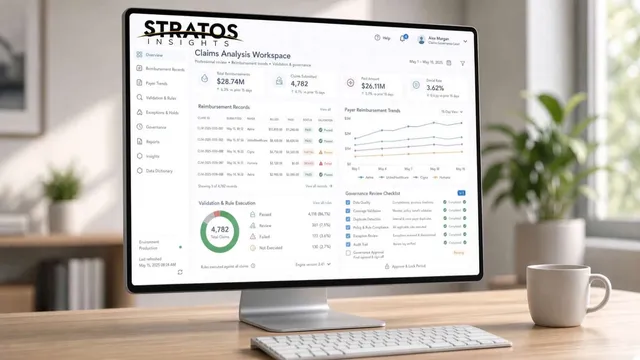
PBM reports can inform oversight, but independent reimbursement analysis validates claims-level economics, reimbursement behavior, spread visibility, and…
Start with an independent, claims-level look at reimbursement performance, in clear, defensible terms your team can act on.
Answers come only from stratosinsights.com. Please do not share claims or patient data here.
Hello. I can explain what Stratos does, who it serves and how to start a review. What would you like to know?